


Dry ice blasting in the dairy industry
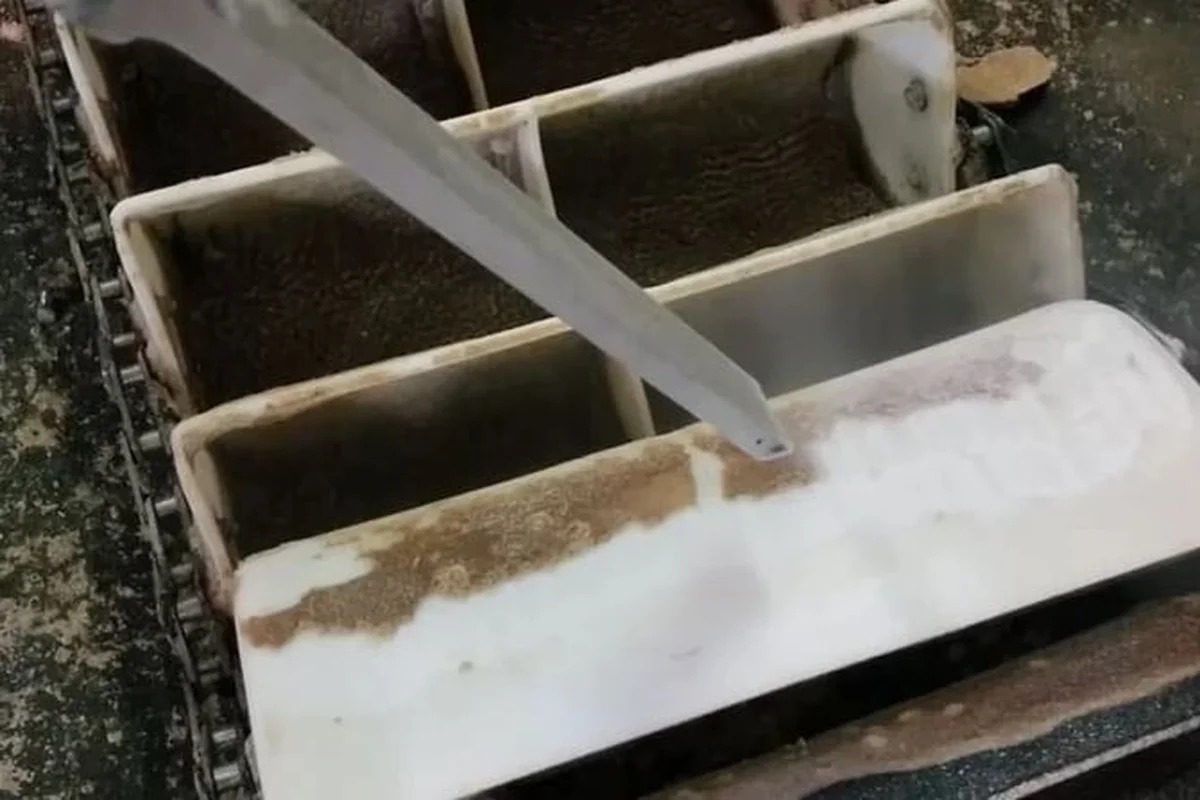
Dairy production demands strict hygiene. Fat fouling, protein residue and milk deposits on pasteurizers, cheese molds, press plates and packaging machines must be removed consistently without introducing moisture or chemistry into equipment that contacts your product directly.
Cold Jet dry ice blasting offers a third cleaning method alongside CIP and manual work: fully dry, non-abrasive and without wastewater. This article covers where Cold Jet does and does not fit in a dairy plant, and which machines are most used.
Why CIP and manual work do not cover everything
Clean-In-Place remains the standard for closed pipework and tank systems. For open equipment you get stuck: cheese molds have to come apart for cleaning, press plates accumulate whey residue that water rinses out with difficulty, and pasteurizer plates eventually develop protein cake that CIP alone does not penetrate.
Manual scrubbing costs hours per part and creates cross-contamination risk between production runs. For producers switching between cheese types or allergens, that is unacceptable.
How dry ice blasting works on dairy equipment
Cold Jet pellets clean through thermal shock and sublimation without introducing water or chemistry. The CO₂ is food-grade and leaves no residue. Suitable for open equipment, modular production lines and hard-to-reach corners in molds or press systems.
For pasteurizer plates the equipment has to be cooled to working temperature. For cheese molds and presses, cleaning can happen between runs without long pauses. One operator, compressed air from your existing compressor, no wastewater.
Concrete benefits for dairy production
- ✓Cleans open equipment without disassembly or CIP hook-up
- ✓Zero water, zero chemistry, no wastewater
- ✓Fully dry: safe for electronics and bearings
- ✓Allergen management when switching between cheese types and runs
- ✓Reaches complex geometries on cheese molds and press plates
- ✓HACCP, FSSC 22000 and BRCGS compatible
- ✓Lower water consumption and lower wastewater levy
- ✓Safe for stainless steel, polymers and food-grade rubber
Applications in dairy production
| Equipment | Typical contamination | Recommended machine |
|---|---|---|
| Pasteurizer plates | Protein cake, milk residue | PCS Ultra |
| Cheese molds (polymer and stainless steel) | Whey residue, fat fouling | i³ MicroClean 2 / PCS Ultra |
| Press plates and pneumatic systems | Whey residue, scale | PCS Ultra |
| Filling machines and dosing heads | Milk residue, fat dust | i³ MicroClean 2 |
| Packaging machines (sealers) | Adhesive, plastic residue | Aero 40FP |
| Cheese production conveyors | Whey, fat, cheese residue | Aero 40FP |
Recommended Cold Jet machines for dairy production
The PCS Ultra and i³ MicroClean 2 cover the bulk of dairy applications. For heavy cleaning on pasteurizers and conveyors you can also deploy the Aero 40FP.
Related applications in food production
- ✓Dry ice blasting in bakery
- ✓Dry ice blasting in chocolate
- ✓Dry ice blasting in meat and slaughterhouse
- ✓Dry ice blasting in packaging
Want to test Cold Jet dry ice blasting in your dairy production? Schedule a no-obligation on-site demo.
Request a demo →Frequently asked questions
Can dry ice blasting be used on pasteurization equipment?
Yes, provided your pasteurizer is cooled to working temperature (required by most manufacturers). Cold Jet cleans heat exchangers and pipework without introducing moisture. Hygienic and residue-free. Discuss the specific installation with our specialist.
How does Cold Jet fit within our CIP cycle?
Cold Jet replaces or supplements open-equipment cleaning. CIP (Clean-In-Place) remains the standard for closed pipework. For open parts like cheese molds, press plates, hanging systems and calibration equipment, dry ice blasting is often more cost-effective in time and water savings.
Does dry ice blasting remove fat fouling and protein residue?
Yes, both. Grease build-up and dried protein residue release thermally from steel or polymer surfaces. For heavily carbonized proteins on pasteurizer plates a second session may be needed; for daily cleaning, one treatment is sufficient.
Which Cold Jet machine fits dairy production?
For delicate equipment (filling machines, dosing heads) we recommend the i³ MicroClean 2. For heavier cleaning (pasteurizers, press molds) the PCS Ultra. The PCS also offers 28 selectable pellet sizes, which helps on mixed applications.
What is the difference with wet CIP cleaning on water and chemical consumption?
A traditional CIP cycle typically uses 200 to 800 liters of water per machine plus alkaline cleaners and acids. Dry ice blasting uses zero water, zero chemistry and produces no wastewater. For plants with water levies or strict wastewater limits, that delivers substantial savings.